© ClementsCenter
Ms Debalina Ghoshal (1)
Arms control mechanisms prevent states from pursuing conventional and nuclear arms build-up resulting in an arms race that could threaten regional and global security. Nuclear arms control measures prevent parties to such measures from pursuing such a race with nuclear capabilities that could cause destruction and undermine security. States could ban a complete class of weapon system or agree to put a moratorium to further development and testing of new capabilities and restrict quantitative improvements that in future also promote non-proliferation efforts.
However, the success of such arrangements depends on geopolitical factors and geo-strategic imperatives that determine domestic policies affecting these arms control measures. This article analyses the policy implications of domestic mechanisms on global arms control measures in the light of the New START Treaty having reached its expiration in February 2026 and Russian President Vladmir Putin’s proposal to US President Donald Trump to adhere to the treaty for one year after expiry. There seems to be an unconfirmed agreement between the two countries to continue to adhere to the treaty provisions on a reciprocal basis and launching new negotiations on a successor treaty.
Similarly, the article also discusses the nuances of other arms control measures affected by domestic policies.
Arms Control nuances
In September 2025, Putin expressed his desire to adhere to the “central numerical limits” of the treaty for one year after expiry. This was a proposal made by Putin for keeping the New START treaty functional between the United States and Russia. However, it is Moscow’s own decision based on security situations that will determine whether Moscow is willing to “voluntary, self-imposed restrictions.” But as of now, Putin views this Treaty crucial to “avoiding strategic arms race” despite the missile defence arms race that calls for modernisation of nuclear arms especially in the light of other states focusing on modernising their nuclear arsenals. Hence, he feels that abandoning this treaty could become a “mistaken and short-sighted step.”
This development can be viewed in positive light for arms control measures especially as the Intermediate Range Nuclear Forces (INF) Treaty, one of the most holistic arms control mechanisms is no longer in force and also after Russia’s own decision in 2023 suspended its participation to the New START Treaty and revoking the ratification of the Comprehensive Test Ban Treaty (CTBT) the same year. Russia also argued on favour of the utility of nuclear weapons against conventional attacks and promoted it in their own nuclear policy of 2024.
This means that Moscow focused on the possible use of nuclear weapons even against conventional attacks. But in 2025, Moscow refrained from the use of nuclear weapons, despite Ukrainian forces destroying Russian bombers in drone attacks and instead proposed to adhere to the New START treaty post its expiry. This decision to refrain from a nuclear attack despite the attack on its nuclear bombers throws light on the resilience that states with nuclear weapons manage to possess despite the crisis scenarios that poses the challenge of even a ‘use them or lose them.’ Moreover, despite suspending participation to the treaty, Moscow did not withdraw from the treaty and continued to abide by the quantitative restrictions of the treaty.
The United States also views the New START treaty in positive light as a mechanism that “enhances U.S. national security by placing verifiable limits on all Russian deployed inter-continental range nuclear weapons.” This unilateral view of the US coincides with the bilateral view of the treaty which will “mutually enhance the security of the Parties and predictability and stability in strategic offensive forces, and will include effective verification measures drawn from the experience of the Parties in implementing the START Treaty.” This is precisely why Trump considered the extension of the Treaty as a “good idea” although he said on 8 January 2026, “if it expires, it expires”, adding “we’ll do a better agreement.”
Hence, states parties to arms control treaties generally echo similar perspective as the global treaty echoes. Once the views in the domestic arena alter from the views of the global treaty, a state no longer abides by the treaty. This is true in the case of 1987 INF Treaty as well as the 1972 Anti-Ballistic Missile (ABM) Treaty: two holistic treaties which are no longer functional. However, the liberty to withdraw from a treaty is only possible when not only treaties provide the provision to withdraw but also the state’s own laws include the provision to withdraw from age-old treaties.
Article XV of the INF treaty offered provisions to parties to withdraw from the treaty, but the withdrawal from the Treaty was possible for the United States given their own executive laws that provided the right of a President to withdraw from a treaty that did not serve any purpose or threatened the US national security. This is also the similar method in which the US withdrew from the ABM treaty under Article XV of that Treaty and also the authority of the President of the US to withdraw unilaterally from an international agreement that allows to do so.
The 2015 “Iran Nuclear Deal” (JCPOA), for the United States was only an executive agreement and not an international treaty because Obama, who negotiated it, knew that he could not get the votes in the Senate to ratify it. This allowed Trump to withdraw from it unilaterally in 2018, although neither the JCPOA nor the UN Security Council resolution endorsing it included any withdrawal provision.
However, the threat perceptions for the New START Treaty are different from the INF Treaty and the ABM Treaty. This resulted in domestic decisions to withdraw from arrangements that had minimal global influence and bound the parties to technological restrictions believed to hamper their deterrence in the long run. Russia raised concerns regarding the INF Treaty since 2007 itself when Putin stated that the Treaty did not serve Russia’s interest any longer.
The New START’s success on the other hand continued owing to the fact that the treaty did not completely ban strategic nuclear class of weapon systems, but only imposed ceilings on the number of offensive strategic missiles and bombers and nuclear warheads that could be deployed. Thus, parties to the treaty possessed deterrent capabilities similar to the capabilities of regional players. In fact, in 2025, Trump had also proposed to expand nuclear arms reduction talks to China. This means that domestic policies on bilateral arms control measures are affected by regional and global developments.
This is precisely why both the United States and Russia are maintaining quantitative restrictions despite the dire need for strategic nuclear deterrent modernisation that has led both parties to focus on qualitative modernisation to pursue their arms race. However, qualitative modernisation may strengthen nuclear deterrence and enable two nuclear rivals to maintain the ‘offence- defence’ paradox and keep the nuclear threshold high. This nuclear modernisation was considered necessary in the light of advanced air and missile defence capabilities and also as both parties do not follow a ‘no-first use’ policy in their nuclear doctrine vis-à-vis each other. In fact, qualitative modernisation could also reduce the burden of having nuclear deterrence rely on quantitative means and adopting minimalism in nuclear deterrence.
Nevertheless, the Bilateral Consultative Committee (BCC) in the New START treaty provided scopes to both the parties to address concerns regarding any alterations to the treaty and also regarding any alleged violations to the treaty or related apprehensions. Such platforms to ensure verification and compliance of the treaty may have provided the parties to the treaty a respite that concerns and grievances regarding the treaty obligations would be addressed and solve cooperatively.
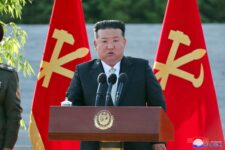
State-imposed laws and restrictions could overpower not only bilateral agreements but also global arms control agreements. For instance, in 2022, North Korea declared itself a nuclear-weapon state by a passing a law and ruling out the possibility of denuclearisation. The law also stated Pyongyang’s nuclear doctrine that called for ‘pre-emption.’ In 2023, the Supreme People’s Assembly also adopted a constitutional amendment that stated, “North Korea develops highly nuclear weapons to ensure” its “rights to existence” and to “deter war” calling for the need to “push ahead with the work for exponentially boosting the production of nuclear weapons and diversifying the nuclear strike.”
Prior to this step, Pyongyang also withdrew from the Nuclear Non-Proliferation Treaty (NPT) in 2003 following the provisions of Article X of the treaty that allowed withdrawal after three months notification, although it did not abide by the obligation to explain its decision to the UN Security Council. North Korea also conducted six nuclear tests between 2006 and 2017. Under its Byungjin policy that “simultaneously pushed forward its economic construction and building of nuclear forces” North Korea continued to develop nuclear-capable delivery systems that included intercontinental range-missile capabilities also.
On the other hand, Iranian Supreme Leader Ayatollah Ali Khamenei claims that Iran has issued a fatwa (religious decree) against nuclear weapons despite the accusations on Iran’s nuclear programme believed to have a ‘possible military dimension.’ The Supreme Leader is believed to have stood firm on this fatwa despite military and political leadership pleading to bend the norms and pursue nuclear weapons capability.
Similarly, each time there has been a debate on the possibilities of nuclear weapons for Japan with Japanese Prime Minister Sanae Takaichi suggesting in 2025 to reconsider the country’s Three Non-Nuclear Principles (possession, production and import of nuclear arms), such notion has been negated by the justification of Article 9 of the Constitution. Political leadership changes also prompt alterations to views and notions regarding weapon systems and deterrence. When Shinzo Abe was the Prime Minister of Japan, he followed the belief of refraining from the development of nuclear weapons.
There are also debates in South Korea regarding the possession of nuclear weapons owing to a distrust of US extended nuclear deterrence over South Korea. Many public opinions have shaped towards nuclear weapons South Korea owing to threats from North Korea and China: both possessing nuclear weapons.
Yet again, states may choose to impose a moratorium based on their domestic policies even without being parties to the arms control mechanism. For instance, states like France and the United Kingdom have demonstrated that they have stopped production of fissile materials for nuclear weapons by a self-imposed moratorium despite the lack of progress of the Fissile Material Cut-off Treaty (FMCT), an international treaty proposed to ban the production of highly enriched uranium (HEU) and plutonium: two components crucial for the development of nuclear weapons.
However, in 2025, the lower house or the State Duma of the Russian parliament citing “threats to strategic stability” as the reason approved its withdrawal from the Plutonium Disposition Management Act (PDMA), an arrangement between the United States and Russia made to reduce the plutonium stockpile from both the countries. This decision by the parliament in Russia was undertaken despite the fact that Moscow has not been producing fissile material for nuclear weapons due to its extensive stockpile.
Conclusion
Domestic decision making and debates regarding arms control measures determine to a considerable extent the success of a legally binding arrangement aimed at promoting peace and strategic stability. However, strategic stability is not a static phenomenon and is a relative term subjected to greater security interests of the state party to these arrangements. This makes arms control mechanisms volatile and vulnerable to regional and global developments that determine the decision making of the state at domestic level.
These decisions could either result in positive outcomes or bring out negative impacts on state’s arms control policies. Nevertheless, the global and domestic arms control mechanisms are interdependent. This means that the decision to revoke an arrangement could only be made possible when a state’s own constitution allows provisions to do so, while a state could only revoke a global arrangement when there is a formal provision to do so.
1 – Advisor, Indian Aerospace and Defence News and Ultimate Defence; author of the book Role of Ballistic and Cruise Missiles in International Security (2024). In this article the author expresses personal views that do not necessarily coincide with the positions of IDN.